Zobrazují se příspěvky se štítkemhistory. Zobrazit všechny příspěvky

středa 1. dubna 2009

Would Galileo pass peer review today?

The case of Galileo Galilei, who was condemned for promotion of heliocentric model is usually interpreted by propaganda of mainstream science as a manifestation of superiority of so called scientific method over reactionary stance of Holy Church up to level, every notion of Galileo in different context is considered a direct manifestation of crackpotism. But under more thorough view we can identify many common points between reactionary stance of Holy Church and approach, which proponents of mainstream science are applying against promoters of Aether concept:
  1. Heliocentrism was as an ancient Greek model by the same way, like Aether concept, so called plenum. It was thrown away later mostly from ideological reasons in both cases.
  2. Holy Church was dominant meritocratic organization in Galileo era by the same way, like mainstream science today. Quantity criterion plays a role in AWT models of sociology, because majority mostly adheres to more conservative stance, then isolated souls due at the beginning of social cycle due the mutual compensation of progressive ideas (mutations) inside of larger groups.
  3. Mr. Galileo has used an intuitive logical arguments without formal math to support heliocentric model (i.e. the order of Venus phases, orientation of lunar craters shadows, etc.), but they were ignored by his opponents on behalf of formal models by the same way, like mainstream science ignores logical arguments of Aether proponents on behalf of formal models - just because of their lack of formal math.
  4. From the above reasons, Galileo was considered a controversial - if not naive - crackpot by the rest of people of his time by the same way, like many proponents of Aether concept today.
  5. Both Holy Church at Galileo era, both mainstream science today have developed a tools for fast classification of renegades and crackpots without deeper analysis of their ideas, for example Malleus maleficarum handbook or famous crackpot index.
  6. Heliocentric model was opposed by lack of stellar parallax regarding to Earth absolute motion, Aether model was opposed by lack of reference frame motion regarding to Earth absolute motion. This connection renders Aether model controversy as a direct analogy of heliocentric model controversy, just at different space-time scale.
  7. While lack of parallax is was quite relevant argument against heliocentrism, the lack of Aether reference frame is result of pure misunderstanding of particle environment concept, as the motion of no environment can be observed by its own waves. This point renders mainstream science even more biased against logic and confused, then the proponents of geocentricism at Galileo time.
  8. Geocentrists have ignored real life physics, the inertial physics in particular, which excludes the motion of heavier Sun around Earth on behalf of epicycles model by the same way, like space-time oriented model of contemporary physics ignores many real life connections of inertial character of vacuum, leading to wave character of light and many other phenomena.
  9. Geocentric model was Platonism based on ad-hoced numerical regression of observation and ad-hoced geometrical constructs (deferents and epicycles) without deeper understanding by the same way, like mainstream physics today, which prefers formal theories based on ad-hoced postulates, abstract geometric constructs (strings, manifolds and branes of M-theory) and overly complex formal regression of reality, which nobody can understand at intuitive level too.
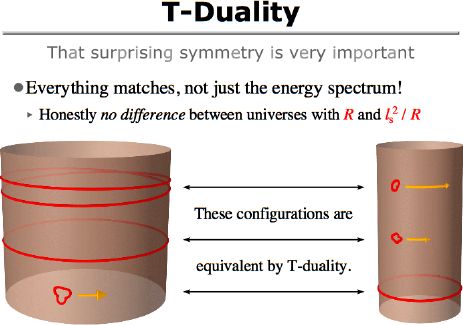
  10. Geocentric model was used for calculations of motion of planets in Galileo times, although we know by now, these observations belongs into dual, i.e. heliocentric model. Analogously, mainstream science is blindly using relativity for interpretations of many phenomena (like gravitational lensing), which belongs into dual models by their very nature. We can consider this paradox a sort of supersymmetry phenomena (a formal model of theory is serving for confirmation of T-dual theory).
  11. Formal models of geocentrists were of infinitesimal practical significance at Galileo times, they served mostly for calculations of horoscopes, based on periods of solar eclipses and planetary conjunctions, which gaved them the sign of authenticity. Many scientists today are using an Aether based models on background and Newtonian physics formalism (the Lagrangian and Hamiltonian calculus in particular) to give the predictability and notion of authenticity to their theories.
  12. Many astronomers earned money like astrologers by bullshitting of layman people by their calculations without deeper understanding of their subject by the same way, like promoters of many scientific theories today, the promoters of string theory in particular.
  13. Background motivation of negativistic stance of promoters of geocentric model was the fear for lost of their informational monopoly for interpretation of reality by mainstream paradigm (a theology in particular). The motivation of the negativism of mainstream scientists toward Aether model is the lost of their monopoly for interpretation of reality by so called scientific method.
  14. The sectarian approach of both mainstream science, both Holy Church and other closed communities is characterized by so called novitiate period, during which new adepts are brainwashed by mainstream approach, before they're allowed to continue in further education and productive work. We can face this in contemporary educational system, where the formal approach to physical lectures prevails instead of more intuitive nonformal one.
It's apparent, history of science just repeats in social cycles at more advanced level of human understanding. Science just switched its progressive role with Holy Church of Galileo era. AWT explains this stance switching by inertial model of nested phase transforms, which is occurring inside of every large particle system during its gradual condensation/compactification.

When such system becomes sufficiently dense, its free-thinking particles will change into correlated, self-censored continuum, i.e. fluid or waves of energy. After then the density fluctuations of this fluid will behave like new generation of particles, while the former generations of particles are behaving like space-time or like energy wave by now. It means, the matter/particles and energy/space will switch their roles gradually and this evolution can repeat many times.

It may be interesting to follow, whether proponents of Aether theory will become such a brake of further evolution of science by the same way, like Holy Church of Galileo era or the proponents of mainstream science today. Thorough understanding of AWT pluralism should prohibit the formation of bias in ideology, though. We'll see. If nothing else, dense Aether concept could define a new era of ethics, tolerance and humanity understanding.

neděle 16. listopadu 2008

How ancient physics was reborn

Main purpose of this post is just to track rather fast re-introduction of ancient Aether model (possibly under influence of AWT concepts) into mainstream science again by using of online available sources. Therefore only links to other articles with minimal comments will be presented here and the list will be extended gradually regarding to public proposals:
  1. Principia Discordia (1958)
    Discordianism is based on pantheistic idea, that chaos is all that there is, and that order and disorder are both illusions (a multiple-ego solipsism).
  2. More is different (Aug, 4, 1972)
    P.W. Anderson suggested the fundamental principle of emergence, i.e. that ‘More is Different’, meaning that complex physical systems may exhibit behavior, that cannot be understood only in terms of the laws governing their microscopic constituents. Later this claim was strengthened by proving that many macroscopic observable properties of infinite periodic Ising lattice cannot in general be derived from a it's microscopic description.
  3. Multi-Level Cosmology (1984)
    Linguist Mark Hucko proposed an alternate cosmological theory, based on multi-level Universe concept, which was elaborated recently by Wiltshire, Leith and others and which follows directly from AWT.
  4. Thermodynamics of Spacetime: The Einstein Equation of State (Apr 4, 1995 )
    T.A. Jacobson found equivalence Einstein field equation of general relativity and thermodynamic state equation ΔQ=TdS connecting heat, entropy, and temperature by using a Raychaudhuri equation and the proportionality relation between area and entropy for acceleration horizon. This perspective was generalized recently by Brustein and Hadad and it follows to Universe model composed of ideal Boltzmann gas, for which enthropy was defined originally.
  5. Fabric of reality (March 1997)
    Physicist David Deutsch proposed causual foam concept named after his book, promoting the multiverse, computational, epistemological, and evolutionary principles.
  6. Superfluid helium as a vacuum (Jun 1, 1998)
    Slava Grebenev and colleagues found that small molecules dissolved in droplets of liquid helium can rotate freely, just like they do in a vacuum.
  7. Return of the Aether (Jan 1, 1999)
    Dr. Sid Deutsch in his book makes sense out "quantum weirdness" by resurrecting a long-buried 19th century scientific concept. Only the 140-year-old idea of the ether, brought up to date to to fit modern theory, can explain these gaps.
  8. Ether Re-emerges as the Je Ne Sais Quoi of Physics (Feb 2, 1999)
    Malcom W. Browne in reaction to Dr. Frank Wilczek's issue of Physics Today in NYT article states, "'Empty' space is anything but empty; the ether lives on."
  9. Shock-wave cosmology inside a black hole (June 23, 2002)
    Joel Smoller and Blake Temple proposed mechanism of Universe formation by collision of shock waves during black hole formation, which follows from Aether wave theory, until we consider black hole a material object.
  10. Shock-wave cosmology inside a black hole (October 17, 2002)
    J. Smoller and B. Temple are presenting a shock-wave solutions, indicating a cosmological model in which the big bang arises from a localized explosion occurring inside the black hole of an asymptotically flat Schwarzschild spacetime in analogy to expyrotic cosmology.
  11. Cosmology from the Top Down (May 29, 2003)
    In his talk, Prof. S. Hawking presents observer dependent "top down" cosmology, in which universe exhibits an infinite number of histories and futures, which is consistent with AWT dispersive model of omnidirectional Universe expansion, as proposed first by J.C.Cranwell in about 2004.
  12. Process Physics: From Information Theory to Quantum Space and Matter (June 2003)
    Prof. Reg Cahill in his book presents a dynamic model, where space and matter are seen to emerge from a fundamentally random but self-organising system in a process semantic information modelling.
  13. New Theory: Universe Was Born in a Black Hole (17 September, 2003)
    Blake Temple says, the universe will emerge from all this as something like an exploded star, called a supernova, but on an enormously large scale. Einstein's equations work equally well if time runs forward or backwards. But explosive shockwaves, which include an increase in entropy, are time-irreversible. The new theory satisfies Einstein's equations reportedly, while allowing universe to expand. Compare recent podcast of Brian Greene.
  14. Spacetime and strings as an emergent phenomena (October 9, 2004)
    Ed Witten: "One thing I can tell you, though, is that most string theorist’s suspect that spacetime is a emergent Phenomena in the language of condensed matter physics". Well, not all of them, but it doesn't change the point.
  15. Final step towards the theory of everything (August 29, 2005)
    AWT was presented first in public on physforum.com, most of this discussion is archived here..
  16. An echo of black holes (November 25, 2005)
    By Dr. W. Unruh analogy sound waves in a fluid behave uncannily like light waves in space. Black holes even have acoustic counterparts. T.A. Jacobson and R. Parentani are speculating, could spacetime literally be a kind of fluid, like the ether of pre-Einsteinian physics?
  17. Life inside a black hole (10 February, 2006)
    Paul Wesson speculates about a way for you to live inside a black hole: find one that has five dimensions...
  18. Luminiferous aether and physical motivation (May 18, 2006)
    Lubos Motl represents his satiety by fact, "101 years after the discovery of special relativity, some people still think that the luminiferous aether was a well motivated idea"...
  19. You are made of space-time (12 August, 2006)
    An popular article about LQG theory and Smolin, Markopoulou and Bilson-Thompson approach to the foamy structure of space-time, driven by causual triangulation of the dynamic mesh of quantum loops.
  20. Ether Theory Challenges "Invisible Mass" (September 8, 2006)
    Glenn Starkman explains, why the presence of ether in the universe better explains the galaxies' behavior with compare to dark matter and dark energy
  21. Single-particle interference observed for macroscopic objects (September 26, 2006)
    Yves Couder and Emmanuel Fort have managed iconic double slit experiment of quantum mechanics in macroscopic particle system formed by silicon oil drop at undulating watter surface, which models probability waves of particle-particle interactions (see video section of Couder's presentations). An upcoming paper of Couder's group in PRL even suggests a quantum tunneling analogy with ordinary droplets.
  22. The universe is a string-net liquid (15 Mar, 2007)
    Wen and Levin are introducing an idea, what if electrons were not really elementary, but were formed at the ends of long "strings" of other, fundamental particles? They formulated a model in which such strings are free to move "like noodles in a soup" and weave together into huge "string-nets".
  23. Mathematician suggests extra dimensions are time-like (April 17, 2007)
    In a recent study, mathematician George Sparling examines a fundamental question of the nature of space and time. Sparling offers an alternative idea: space-time may have six dimensions, with the extra two being time-like.
  24. A Two-Time Universe? (May 15, 2007)
    USC College theoretical physicist Itzhak Bars has pioneered efforts to discern how a second dimension of time could help physicists better explain the laws of nature. (compare the Vafa's F-theory)
  25. Professor proposes theory of unparticle physics (June 11, 2007)
    Howard Georgi, a physicist at Harvard University, has published a two papers on so-called unparticles physics - a formal geometry model of scale invariant density fluctuations of Aether gas.
  26. The Void.. (October, 2007)
    Frank Close, a Professor of Physics at Oxford University introduces a picture of space-time as acting like an elastic medium, which is reminiscent of the very ether that Einstein's work on electromagnetic radiation (p. 89).
  27. Dark Energy Explained? Maybe If Universe Is Like a Black Hole.. (October 08, 2007)
    By physicist J.W. Lee the mysterious dark energy seems to be forcing the universe to accelerate its expansion stems from the resemblance of Universe to "time reversed" black hole (compare the NS article here).
  28. New-School 'Aether' May Shed Light on Neutron Stars (October 10, 2007)
    The UM group proposes, that an aether concept may still have a place in physics: not representing a medium for light waves, but a universal preferred frame of reference that is physical in nature. Unfortunatelly, a vector-field is rather formally understood concept here.
  29. Surfer dude stuns physicists with theory of everything (6 Nov, 2007)
    A. Garrett Lisi is publishing a paper on his "An Exceptionally Simple Theory of Everything", based on explanation of particle generations by rotation of E8 Lie group, describing the most dense arrangenement of particles, formed by density fluctuation of another particles, recursivelly. (a more detailed NS article, a L. Motl's comments)
  30. Emergent spacetimes (28 Nov, 2007)
    Silke Weinfurtner in his thesis disputes a possibility, that perfect fluid sphere geometry of spacetime may be an emergent phenomenon, which has been motivated by the Analogue Gravity programme.
  31. Inhomogeneous Vacuum: An Alternative Interpretation of Curved Spacetime (14 Jan, 2008)
    After one hundred years after Einstein's “refractive” approach to gravitational light-bending and seventy years of first gravitational lens observation, strong similarities between the light propagation in a curved spacetime and that in a medium with graded refractive index were re-vealed. It was pointed out, that a curved spacetime is equivalent to an inhomogeneous vacuum for light propagation.
  32. Fiber-Optical Analog of the Event Horizon (March 7, 2008)
    This experimental work demonstrated, that physics of vacuum at the event horizon is analogy to spreading of waves in moving media and event horizons are formed where the local speed of the medium exceeds the wave velocity. By sending of ultrashort pulses into foamy structure of optical fibers was demonstrated the blue-shifting of light at a white-hole horizon and that system is capable of probing the quantum effects of horizons, in particular Hawking radiation.
  33. Using Causality to Solve the Puzzle of Quantum Spacetime (June 25, 2008)
    If we think of empty spacetime as some immaterial substance, consisting of a very large number of minute, structureless pieces, and if we then let these microscopic building blocks interact with one another according to simple rules dictated by gravity and quantum theor, a new approach to the decades-old problem of quantum gravity goes back to basics and shows how the building blocks of space and time pull themselves together. (readers response).
  34. The straw man of quantum physics (October 15, 2008)
    Peter Morgan points out, the violation of Bell inequalities rules out the straw man class of classical particle property models but leaves untouched the more significant class of classical random field models (discussion).
  35. The Lightness of Being: Mass, Ether, and the Unification of Forces (October 22, 2008)
    Some physicists (especially those interested in LQCD) theorize, that space is highly structured by the grid, which is the primary ingredient of physical reality and the substance from which all physical matter is formed. F. Wilczek says, the grid is a conceptual descendant of ether, that mysterious substance scientists once believed filled empty space.
  36. Why Einstein was wrong about relativity (October 29, 2008)
    Mitchell Feigenbaum insists that Einstein's theory has nothing to do with light - whatever history and the textbooks might say. "Not only is it not necessary," he says, "but there's absolutely no room in the theory for it." Compare the R. Close's derivation of Lorentz transform by using of clock, based on wave spreading. By AWT the position of light is still somewhat special, as it forms the fastest interaction, mediating the causal information spreading for us.
  37. Emergent Electroweak Gravity (December 15, 2008)
    Bob McElrath proposes emergent model of gravity, caused by gradients of primordial neutrino flux, thus following classical Newton's Aether and Fotio-LeSage theory of gravity.
  38. Black holes grew up before galaxies (January 7, 2009)
    New Scientist's article disputes the idea, proposed three years before, the large black holes were formed before galaxies (a "dark energy star" concept is still considered in this connection, though).
  39. A bizarre universe may be lurking in the shadows (March 04, 2009)
    By AWT antimatter never disappear from observable Universe, it was only finely divided (evaporated) into streaks of dark matter. This prediction was presented a two years before and now recent ATIC and PAMELA observations seems to support it, while interpreting the source as a result of WIMPs anihillation (compare the AWT explanation here).
  40. Remarks on the world-sheet saga (Jun 11, 2009)
    From Schroer's general reasoning follows, only 0-dimensional particles are acceptable building blocks in physics. So string theory must be a theory of point-like particle fields with infinitely many components, too. It follows that one can never include winding modes even if the target space is not simply connected and there is no T-duality.
  41. Mimicking celestial mechanics in metamaterials (July 20, 2009)
    In this experiments it has been proposed a link of energy spreading through GaInAsP metamaterial sponge to celesial mechanics, the spreading of light through vacuum in particular (formation of event horizon a photon sphere of black holes, etc.. - compare the AWT explanation here).
  42. The invariant set postulate (June 29, 2009)
    Tim Palmer proposes a new geometric framework for the foundations of quantum theory and the role played by gravity based on assumption, observable reality forms a smaller fractal subset of states in more general state space (supposedly in simmilar way, like observable density fluctutuations of gas are forming subset of many uobservable states of individual molecules).
  43. Ultraviolet Behavior of N=8 Supergravity at Four Loops (August 17, 2009)
    Group of string theorists demonstrated, by combining desirable aspects of string theory and point-like particles they can escape the problem of infinities (viewpoint).

neděle 7. září 2008

History of Aether Wave Theory

Modern Aether concept has begun by Rene Descartes, who proposed in 1644, that no empty space can exist and that space must consequently be filled with matter. The parts of this matter tend to move in straight paths, but because they lie close together, they can't move freely, which according to Descartes implies that every motion is circular, so the aether is filled with vortices. These ideas were extended later by more specific vortex model of Christian Huygens (1669 -1690) and by Newton's Aether flux model and gravity theory in particular (Principia ~1686, Opticks).

Modern textbooks often claims, Newton believed that space and time were absolute and inviolable - but Newton was a strong proponent of wave/particle duality and he published a variable-density Aether model, in which light and matter trajectories were either bent or deflected by an Aether density gradient. This can be compared to Einstein’s "refractive approach" to gravitational light-bending (1911), which was abandoned by Einstein himself on behalf of formal space-time curvature based description of gravity. Madame Blavatsky, in 1888, predicted that the ether would soon be rejected. She was right. It was rejected officially by wast majority of scientists in 1905, when Albert Einstein first dispensed with it. Einstein half-rejected the aether, he did not reject it in the sense of action by contact or instantaneity.

These trivial and quite natural models were never refuted in fact! Modern physicists never realized, Aether environment cannot be observed by its waves like every else environment - so they misinterpreted negative result of Michelson-Morley experiment (and many others) by the same way, like virtually every other aspects of Aether hypothesis toward less complete and intuitive space-time concept. Particle model doesn't explain, what the space-time really is, but it explains fractal foam nature of space-time curvature and the gradient driven symmetry of space and time . At Einstein time, scientists were not aware of another subtleties (Lens-Thirring effects, connection of QM and Lorentz symmetry violation, etc.), which are forming the motivation of AWT by now.

Believe it or not, neither AWT is completely new. It seems, the original author of dense Aether concept was Sir Oliver Joseph Lodge, who published in Harper's Magazine in 1904 his "Electric Theory of Matter", which is basically the electromagnetic theory of Aether. The dense Aether concept was mentioned even in some textbooks after then (1908).


The fundamental mistake of another well known Aether proponent T.J.J.See was, he didn't understood the dense Aether concept like others, albeit Lodge has explained it to him explicitly. From the above discussion it's evident, the conceptual father of AWT was rather Oliver Lodge, not T.J.J.See, albeit the later had published a lotta articles about Aether (1, 2, 3, 4, 5, 6, 7) later. But his Aether Wave Theory has only few common points with Lodge's concept, for example the assumption, all forces are mediated by Aether waves.

From AWT follows, era of formal and nonformal approach alternates in science in less or more apparent waves, the density of which increases, because of increasing information density. Intuitive plenum concept of ancient Greeks was replaced by abstract Newtonian concept of absolute space and time. With better understanding of wave nature of light at the beginning of 19th century Aether theory was revived, but it was replaced by formal combination of relativity and quantum mechanics in 20th century. Now we are facing Aether concept again, because contemporary system of formal dualities has reached its limits in many aspects, the complexity in particular.

středa 5. července 2006

Aether Wave Theory Introduction

Aether Wave Theory (AWT) is chaos based model of observable Universe based on luminiferous Aether model of Rene Descartes ("Principia Philosophiae", 1642), who proposed the Aether as an inertial particle environment, capable of energy spreading in waves. It's based on the assumption, the observable reality is recursively formed by scale invariant density gradients of hypothetical particle environment - so called the Aether. It's an extrapolation of "Boltzmann brain" concept: the complexity of density fluctuations in particle system can increase with mass/energy density of this system up to level, they may be able to interact/observe it's own environment by less or more consciouss way. AWT folllows ideas of discordian monism and pantheistic solipsism.

With compare to other Aether theories, AWT uses the assumption of (supposedly infinitely) high mass/energy density of Aether, which was proposed originally by Olivier J. Lodge ("Electric Theory of Matter", Harper Magazine. 1904), but if was later abandoned on behalf of formal theories, like relativity or quantum mechanics. The dense Aether concept follows from the fact, the light of very short wavelength cannot be mediated by sparse inertial environment in transversal waves.

The physical model of AWT is based on the assumption, the only observable portion of sufficiently dense inertial environment are the density gradients/fluctuations/waves of it - by the same way, like during observation of condensing supercritical fluid.

Inside of dense particle systems these fluctuations are similar to foam or sponge, being formed by heavily compacted density fluctuations of ideal Boltzmann gas. Most of energy is spreading along density gradients of such environment in transversal waves, i.e. by analogous way, like the light is spreading through vacuum.
These fluctuations can form a less or more continuous phase, which can exhibit another level of density fluctuations in the narrow range of conditions, when it behaves like foam or fluid, composed of fluctuations of another fluid. This Lifshitz point, which is used to model the triple point in condensed matter physics has increasing importancy in renormalization of quantum gravity and various cosmology models.


The AWT extrapolates such observation to the infinite mass/energy density under assumption, whole Universe is composed by infinite number of recursively nested levels of Aether density fluctuations. By AWT the level, which we are living in, is forming the observable generation of Universe. In certain sense is dual to whole contemporary physics, which is atemporal due its adherence to formal math language: "Physics is not about the 'why' of things but the 'how'". In comparison with physics, AWT is trying to explain origin of observable thing and phenomena in logical way and it doesn't care about formal regressions of reality.

Max Planck: "A new scientific truth does not triumph by convincing its opponents and making them see the light, but rather because its opponents eventually die, and a new generation grows up that is familiar with it."